
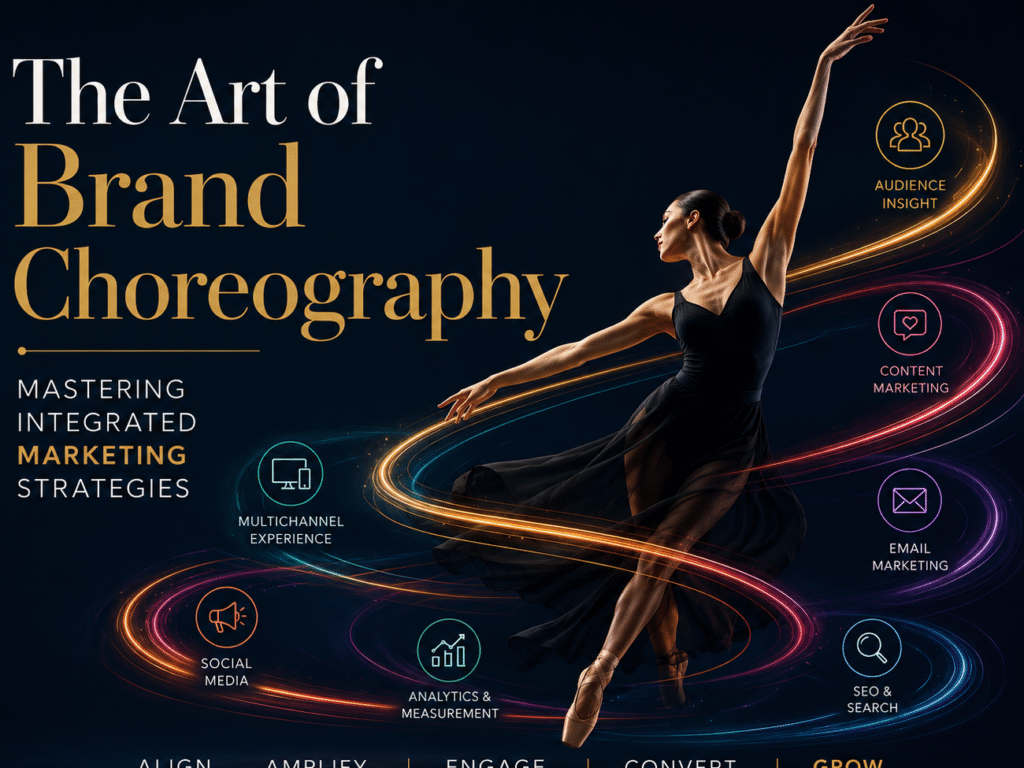
The Art of Brand Choreography: Mastering Integrated Marketing Strategies
Integrated marketing strategies help brands speak with one clear voice across every channel. Without them, customers hear mixed messages and lose trust fast. This guide walks you through a proven seven-step framework called brand choreography.
Most brands today use social media, email, ads, and content all at once. However, they often treat each channel as a separate project. As a result, the messaging feels disconnected and the brand looks unorganised. Therefore, learning how to tie all these channels together is one of the most valuable skills in modern marketing.
The LinkedIn Learning course Marketing Foundations: Integrated Marketing Strategies tackles this problem directly. It is taught by Mark Burgess and covers everything from brand positioning to real-time marketing. In addition, it uses real B2B and B2C case studies so you can see the ideas in action. Moreover, the course holds a 4.7-star rating from over 600 learners, which shows how practical and useful the content is.
At its core, the course introduces a powerful concept: brand choreography.
What Is Brand Choreography in Integrated Marketing?
Brand choreography is a seven-step integrated marketing framework designed to help marketers reach customers across multiple channels — traditional, digital, and social media — in a unified, coherent way. Think of it like a dance: every channel, every message, every touchpoint must move in rhythm with the others. When they do, the customer experience feels seamless. When they don’t, the brand stumbles.
The framework addresses the integration challenges that organizations commonly face and guides marketers through a complete journey — from building a brand value proposition all the way to launching an integrated marketing campaign and measuring its impact.
The 7 Steps of an Integrated Marketing Strategy
Each step builds on the one before it. Together, they form a complete roadmap from brand clarity all the way to campaign launch. Here is a quick look at what each step covers.
Step 1 — Build a Brand Value Proposition
Your value proposition is the foundation of all your marketing. It tells customers what you do, who you do it for, and why you are better than the competition. First, run a SWOT analysis to understand your brand’s strengths and weaknesses. Then, use those insights to write a short, clear brand statement. Moreover, test it with real customers to see if it connects with them before you build a full campaign around it.
For example, ask yourself what problem your brand solves. Also, ask why a customer should pick you over a competitor. As a result, you end up with a clear, focused message. Furthermore, this message becomes the anchor for everything else in your integrated marketing plan. Without it, your channels will pull in different directions and confuse your audience.
Step 2 — Create Buyer Personas
A buyer persona is a detailed profile of your ideal customer. First, gather data from surveys, interviews, and website analytics. Then, group your findings into two or three clear customer types. In addition, note what each persona reads, watches, and cares about. As a result, your content will feel personal and relevant instead of generic and forgettable. Moreover, your team will make faster decisions because they know exactly who they are writing for.
Step 3 — Tell Your Brand Story
Brand storytelling turns your value proposition into content that people actually want to read. First, decide on the core idea of your story. Then, express that idea in a blog post, a short video, an email, and a social post — all at the same time. In addition, make sure each piece of content links back to the same central message. As a result, customers who find you on any platform will get the same impression of your brand. Furthermore, consistent storytelling builds trust much faster than scattered messaging does.
Completing Your Integrated Marketing Strategy: Steps 4–7
Step 4 focuses on paid, owned, and earned media. Paid media covers ads you buy. Owned media includes your website and email list. Earned media is press coverage and word of mouth. In addition, you need to balance all three types and keep the message the same across each one. However, many brands over-invest in paid media and ignore owned and earned. Therefore, a smart integrated plan gives each type a clear role.
Step 5 is about mapping the customer experience. First, list every touchpoint a customer has with your brand. Then, look for gaps where the experience breaks down. As a result, you can fix weak spots before they cost you sales. Step 6 covers building the right team to carry out the plan. Moreover, step 6 also shows you how to turn your employees into brand advocates. In addition, step 7 teaches you how to launch, track results, and adjust fast using listening tools and real-time data.
Integrated Marketing Strategies in Action: The Audi A4 Case
Audi A4 — “Intelligence Is the New Rock and Roll” (2016)
Audi started by looking closely at what made the A4 different from other cars. As a result, they found a clear story: smart design for smart drivers. Then, they built every channel around that one idea. Billboards and roadblocks created street-level buzz first. Moreover, TV and YouTube ads went deeper into the theme — celebrating engineers and designers. In addition, digital content tied it all together online. Therefore, no matter where a customer found Audi, they heard the same story told in a fresh way.
Looking Ahead: The Future-Ready Marketer
The course doesn’t stop at what’s current — it pushes into what’s next. Advanced topics include real-time marketing for agile marketers, neuromarketing, and the Internet of Things — emerging forces that are already reshaping how brands connect with consumers.
This forward-looking perspective is what separates integrated marketing from simple multi-channel marketing. It’s not about being everywhere. It’s about being everywhere intentionally — with a consistent message, a clear brand story, and a deep understanding of your customer.
Why Integrated Marketing Strategies Matter in 2026
Attention spans are shorter than ever today. However, consumer expectations keep rising at the same time. As a result, brands that send mixed messages lose customers quickly. In fact, integrated marketing is no longer a nice-to-have. Instead, it is the only way to stay competitive in a crowded digital market. Therefore, learning this framework now puts you ahead of most brands that still work in silos.
Moreover, emerging trends like neuromarketing and the Internet of Things are changing how brands connect with people. For example, smart devices now create new touchpoints that did not exist five years ago. In addition, real-time marketing lets brands respond to events as they happen rather than waiting weeks to plan a campaign. As a result, agile brands that use integrated strategies can move faster and spend smarter than those that plan channel by channel. In short, integrated marketing strategies are the foundation of every high-performing brand in 2026 and beyond.